





Kathmandu. While the US Secretary of State’s visit to India is underway, the entire world’s human society has been badly shaken by the terrorist attack on tourists in The Indian state of Kashmir on Tuesday. At least 40 people have been killed in attacks on tourists in Kashmir, even as the federal government claims to have fully strengthened security.
In the backdrop of such a tragic and tragic event, the Indian Prime Minister’s election campaign did not stop. It was not considered appropriate to stop the campaign in mourning. He attended an election rally in the state of Bihar, and announced that he would attack the attackers from the dais. As a result, the tendency to accuse neighboring Pakistan in any terrorist attack in India continued. It was announced to cut the number of Indian diplomatic officials in Pakistan, send back Pakistani officials in India, cancel the visas of Pakistanis and stop the flow of water from the Indus river to Pakistan.


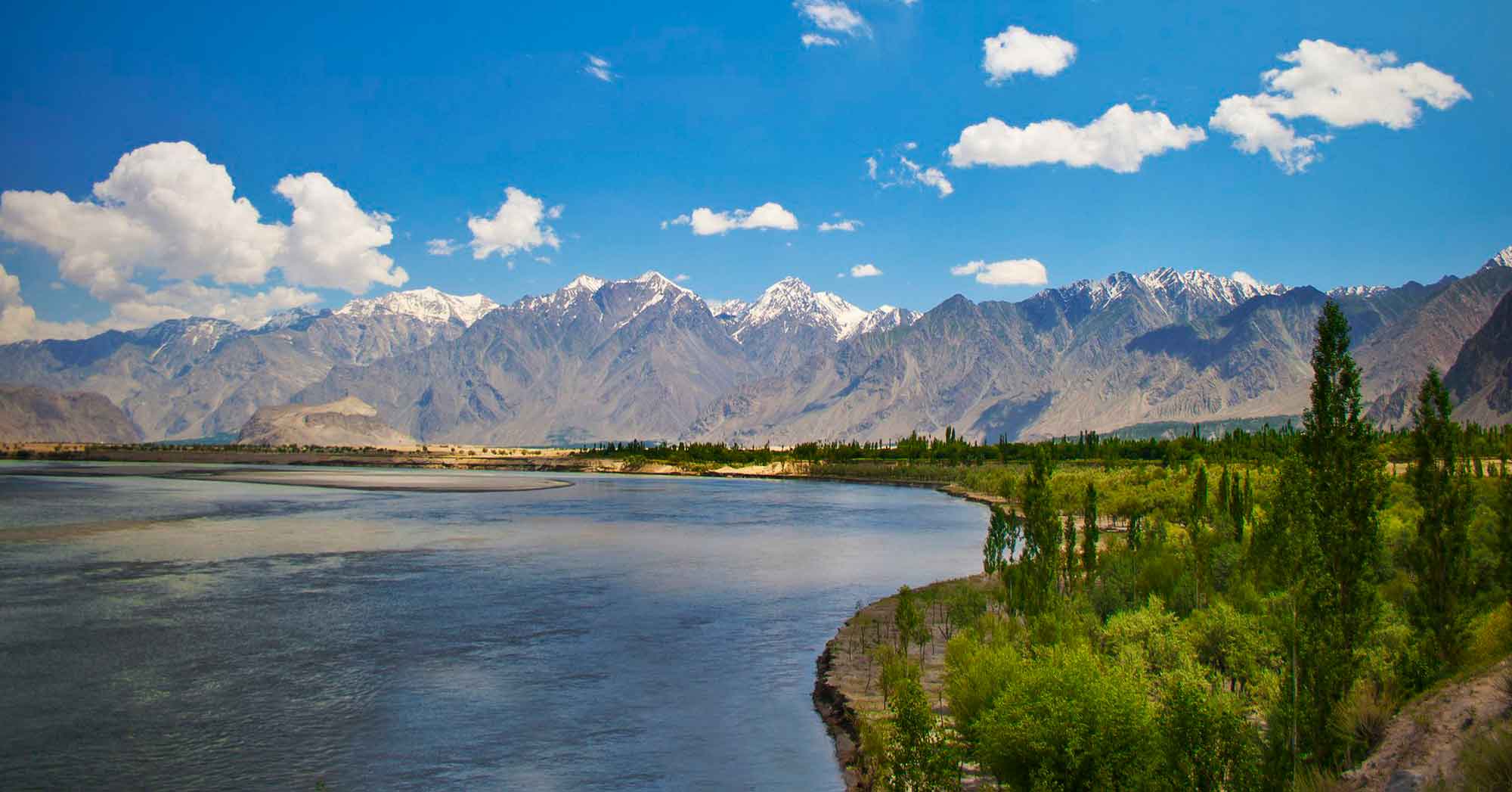
Can India really stop the waters of the Indus and its two tributaries flowing into Pakistan? This question has been playing in the minds of many after New Delhi suspended the historic agreement between the two countries on sharing the waters of six rivers in the Indus Basin after the deadly attack in Indian-controlled Kashmir on Tuesday.
India and Pakistan signed the agreement in 1960. Although the two nuclear-armed countries fought two wars, the treaty was not suspended. Therefore, this agreement has long been considered an exceptional example of cross-border water management.
Not only has the deal been suspended, India has also taken several other steps, accusing Pakistan of supporting cross-border terrorist activities. Islamabad has dismissed the allegations as baseless. Pakistan has also taken retaliatory measures, warning India that if India stops water, it will be like war.
According to the agreement, India will be able to use the waters of three rivers in the eastern part of the Indus Basin, the Irravati, Bipasha and the Sutlej. Pakistan, on the other hand, will be able to use 80 per cent of the waters of the three western rivers — the Indus, the Jhelum and the Chenab.
However, the deal has been controversial in the past. Pakistan had objected to India’s hydropower generation and infrastructure projects by constructing dams on these rivers. Pakistan had argued that this would reduce the flow of water into the river and this was a violation of the agreement. More than 80 per cent of Pakistan’s agriculture and a third of its hydropower are dependent on the waters of the Indus Basin.
Meanwhile, India has been demanding a review of the agreement and changes in some areas, citing the need for irrigation, drinking water and hydropower in view of issues such as climate change. The agreement between India and Pakistan was brokered by the World Bank. India and Pakistan have been engaged in a legal battle over this agreement for a long time.
This time said, this is the first time that either party has announced the suspension of the agreement. The suspension was announced by India. As a country in the upper reaches, India is comparatively in a more profitable position than Pakistan.
What exactly does this suspension of the agreement mean? Can India deprive Pakistan of this vital water for its people by withholding or diverting the indus water? Is that possible for India as well?
According to experts, it is almost impossible for India to stop millions of cubic meters of water due to the high water levels in the rivers of the western region. Just as India does not have a large area to divert and store water on such a large scale, nor does it have a large canal that can handle water.
According to Himanshu Thakkar, regional water resources expert on the South Asia Network on Dams, Rivers and People, most of the infrastructure India has is dam-based hydropower projects, which do not require large reservoirs. In this type of hydropower station, electricity is produced using the energy of the flowing water to rotate the turbines. It doesn’t require much water.
Indian experts say that due to lack of necessary infrastructure, India is not able to properly use even 20 per cent of the water of the Jhelum, Chenab and Indus rivers as per the agreement. With this logic, India wanted to build infrastructure to stop water. However, Pakistan opposed it citing the terms of the agreement.
According to experts, India can now stop or divert more water without informing Pakistan by modifying existing infrastructure or building new facilities.
According to experts, it is almost impossible for India to stop millions of cubic meters of water from its western rivers during high tides. They don’t have large reservoirs or wide canals that need to move such a large amount of water.
Water resources expert Himanshu Thakkar says India no longer has to show any project documents to Pakistan like in the past. But due to challenges such as complex terrain and protests in the country against some projects in India, the construction of new infrastructure to utilize the water of these rivers has not gained much momentum.
Following the 2016 terror attacks in Indian-controlled Kashmir, officials in India’s Water Resources Ministry told the BBC that the construction of several dams and reservoir projects in the Indus river basin would be expedited. Although there is no official information about the current status of such projects, according to many sources, little progress has been made.
According to some experts, if India starts controlling the flow of water through its existing and potential infrastructure, Pakistan will feel its impact when the water in the river completely recedes in the dry season.
Hasan F Khan, an associate professor in tufts university’s department of environmental policy and environmental research, wrote in the Pakistani journal Dawn that another serious concern is what happens when water flow to the basin decreases during the dry season, when water retention is even more important and timely flow is more important. At this time, the absence of restrictions on the contract will be felt the most.
According to the agreement, India will have to share information on water flow with Pakistan, which is crucial for flood forecasting, irrigation, hydropower and drinking water planning.
During the rainy season (June to September), the region is prone to devastating floods. However, Pakistani officials said that before the suspension of the agreement, India had restricted the exchange of hydrological data (information related to water resources).
Pakistan’s former additional commissioner for the Indus Treaty, Shiraz Memon, told BBC Urdu that even before the recent announcement, India used to give pakistan only 40 per cent information about the Indus water resources.
As tensions over water rise in the region, often a question arises, can the upper country use water as a weapon against a lower country?
This condition is often described as a water bomb. Where the upper country suddenly freezes water and then releases all the water at once, which can cause extensive damage to the lower country.