





Kathmandu. China has started construction of dams on the Brahmaputra river in Tibet. China officially announced this on Saturday.
China is building the dam on the Brahmaputra river in Tibet near Arunachal Pradesh in India. The chinese project costs $167.8 billion. China’s project has raised concerns in low-lying coastal countries, especially India and Bangladesh.


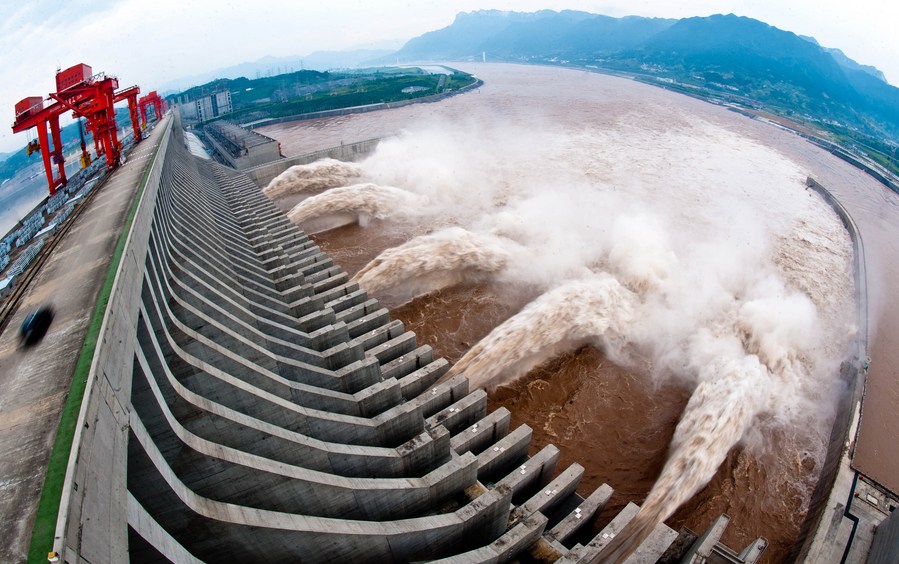
1. This dam to be built by China on the Brahmaputra will be the world’s largest hydropower dam. The project will include five hydropower stations. Their total cost would be 1.2 trillion yuan (US$167.8 billion). The Three Gorges Dam on the Yangtze River in China is the world’s largest dam with a capacity of 22.5 GW.
2. This dam on the Brahmaputra river will generate 300 billion kilowatt hours of electricity per year. The electricity produced there will be supplied mainly outside Tibet. However, part of it can also be given to local consumption needs. China claims that this will create thousands of employment opportunities in Tibet.
3. China This dam is being constructed there, where the Brahmaputra river takes a sharp U-turn and flows into Arunachal Pradesh and then Bangladesh. In such a situation, this dam risks disrupting the natural flow of the river. India and Bangladesh are concerned about the impact on river water flow, ecological stability and regional geopolitics.
4. China is emphasizing the importance of this project in achieving its new energy goals. China has rejected the concerns of India and Bangladesh. However, experts believe that the dam could affect agricultural productivity (for rice and jute crops) and biodiversity hotspots such as the eastern Himalayas.
5. The Brahmaputra is a river flowing in many countries. Its basin covers 580,000 square kilometers in China (50.5%), India (33.3%), Bangladesh (8.1%) and Bhutan (7.8%). In India, it has an area of 1,94,413 square kilometers. These include arunachal Pradesh, Assam, Meghalaya, Nagaland, Sikkim and West Bengal.
6. The Brahmaputra river originates from the Chemayungdung Glacier, located east of Lake Mansarovar in the Kailash ranges of Tibet. It flows 1,200 km east of Tibet as the Yarlung Tsangpo River. The river takes a U-turn at Namcha Barwa, also known as the Great Bend. There it enters India from Arunachal Pradesh (west of Sadiya city).
7. The flow pattern of the Brahmaputra river creates good geographical conditions for hydropower generation. In Bangladesh, the Brahmaputra is known as Jamuna. It joins the Padma river before falling into the Bay of Bengal. The Brahmaputra river is unique. Because it flows in the opposite direction from west to east in Tibet and east to west in Assam.
8. There is a comprehensive memorandum of understanding for cooperation on cross-border rivers and two separate agreements on the Brahmaputra and sutlej. Ashok Kant, former Indian ambassador to China, says that the Sutlej agreement was not signed after the Parechu incident. China did not agree to provide the data. As a result, the renewal of the agreement has been stopped.
9. The Brahmaputra Agreement is renewed every 5 years. It ended two years ago in 2023. Since then, the process of its renewal has been going on through diplomatic channels. At present, no activity is being carried out under this Agreement. That is, the work of moving forward in it is currently in the cold storage.
10. India’s fear from a dam being built by China on the Brahmaputra river is that Beijing may use water as a weapon. If necessary, China can release the water stored in the dam without prior notice. It can lead to flooding in low-lying areas of Arunachal Pradesh and Assam. The construction of large dams will affect residential areas as well as forests and wildlife. – Agency