



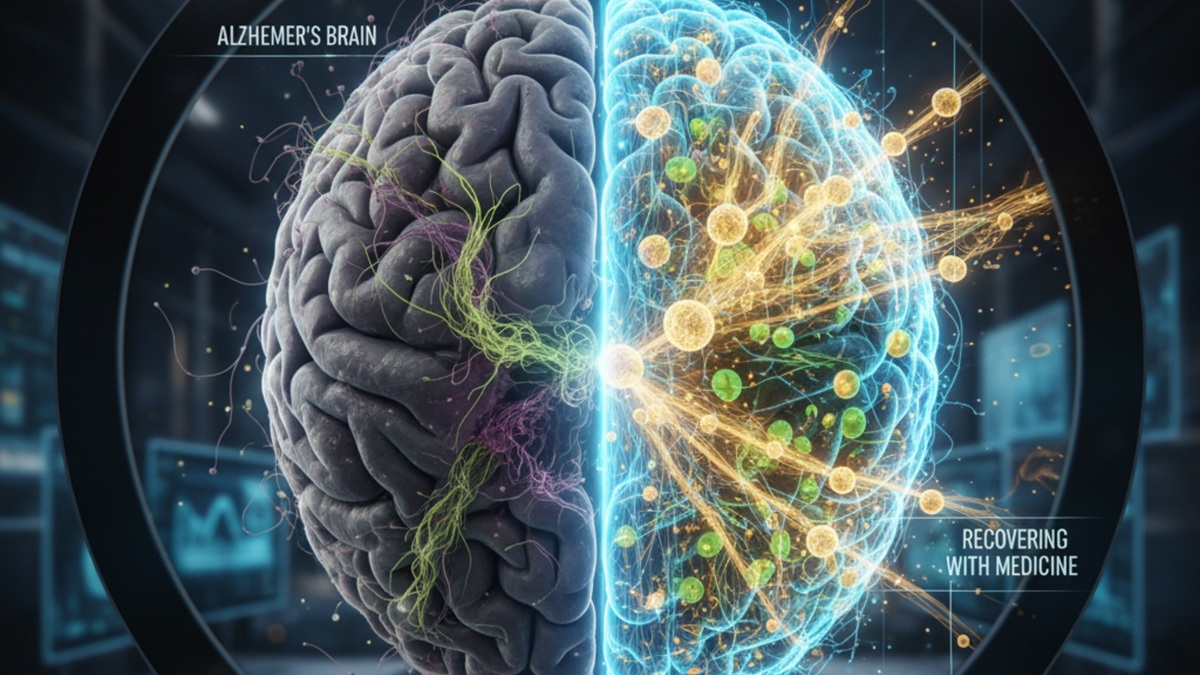


Kathmandu. Scientists have developed a new treatment to remove beta-amyloid, a fatty protein known to cause Alzheimer’s disease, from the brain. This substance stops the exchange of messages between brain cells, causing the patient to lose the ability to forget, recognize and think.
The new treatment activates the brain-cleansing process by targeting this substance. Preliminary research has shown that patients who used the drug improved memory, attention and behavior.

How does this treatment work?
This treatment is a drug prepared by using fine particles. These particles reactivate the brain’s ‘blood-brain barrier’. This helps to remove harmful proteins in the brain.
According to the scientists, amyloid deposits in the brain decreased by 50 to 60 percent when given some doses. The study was conducted by researchers from China’s West China Hospital, University College London in the UK and the Institute of Bioengineering in Catalonia.
The mice that received the drug improved their memory within a few days and their behavior returned to normal. The improvement in aging mice has given scientists hope that there will be positive results in humans as well.
Test results
In the Alzheimer’s model mice used in the research, brain memory function returned to normal. This improvement persisted for months after starting treatment. Scientists say that the drug has not only stopped the progression of the disease, but also helped restart the structure and function of the brain.
Human testing stage
}
The biggest breakthrough so far has been in animal-based research. However, some drugs based on similar principles are also being tested in humans. The drugs, called donanemab and lecanemab, have been shown to slow the progression of disease in humans and reduce amyloid concentration in the brain. However, it is still unclear whether memory will be fully restored. Its durability and efficacy will be assessed through extensive human trials in the coming years.
Scientists
Experts in Europe and the United States have called this discovery a turning point in neuroscience. They say that this technology, which increases natural cleansing ability by activating the brain’s barrier system, could open the way to prevent or cure Alzheimer’s disease in the future.
Conclusion
}
Alzheimer’s disease has long been considered an incurable problem. But this new research shows for the first time that it could not only halt the progression of the disease but also restore lost memories and thinking ability.
The extent of the impact on humans is still being tested, but the discovery offers a ray of hope for millions of families around the world.