



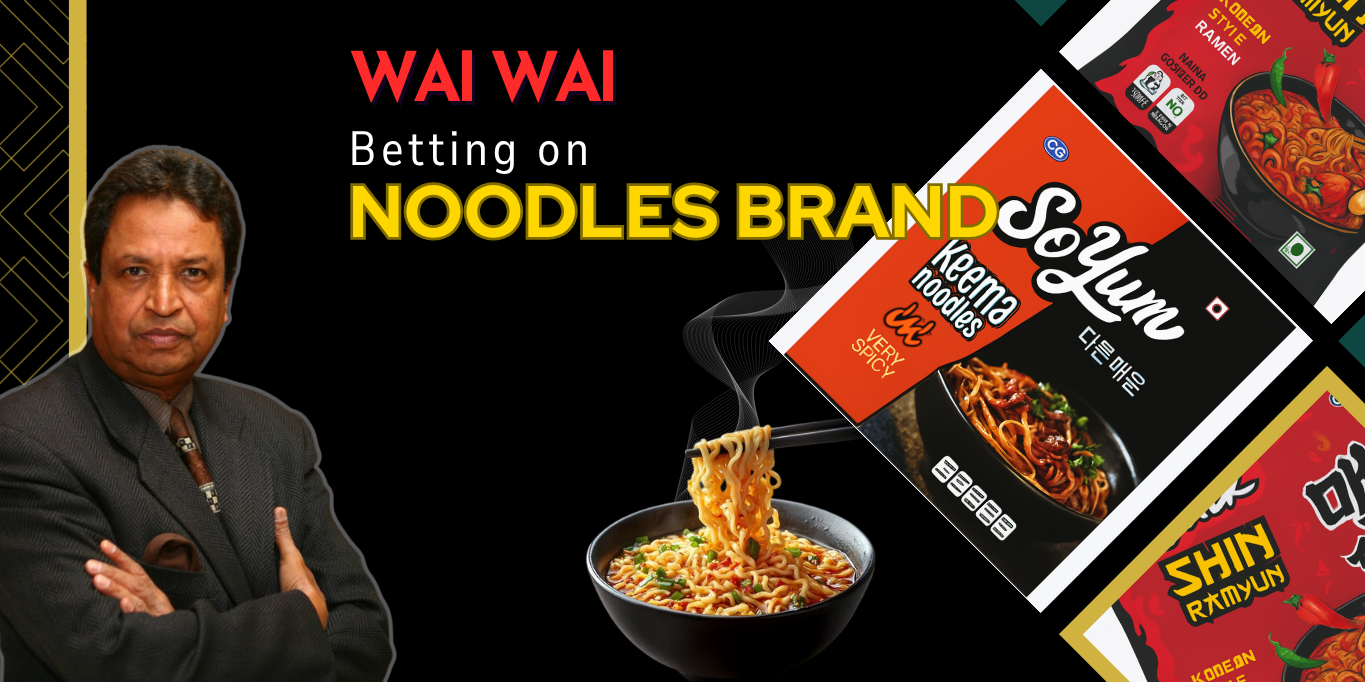


Kathmandu. CG Foods is launching a new brand after the market for Wai Wai noodles, which had been dominating the domestic market for a long time, started shrinking. CG Foods Nepal is trying to save the market by providing noodles, chips, corn flakes and oats to the Nepali consumers under the ‘So Yum’ brand.
CG Foods Nepal, a leading FMCG manufacturer, is making counter-aggressive marketing efforts through its new brand ‘So Yum’. Under the ‘So Yum’ brand, it is introducing at least 10 new products in the first phase, including ready-to-eat noodles, oats, corn flakes, cheeseballs and Korean Shin Rameun noodles.

CG Foods was forced to conserve its market share due to a significant decline in both market share and revenue due to intense competition in products from Yashoda Foods and Asian Thai Foods.
Last April, Wai Wai Kwik launched Korean Piro Noodle Shin Ramun under the brand and now it is bringing the same flavor of noodles from the Yum brand. CG Foods is already selling noodle bhujia in 26 varieties across Wai Wai, Quick and Soaltee brands.
CG Foods’ competitive operating market impact sales revenue fell to Rs 11.67 billion, according to FY2024 unaudited financial statements. In the previous fiscal year, the company had posted a total income of Rs 12.51 billion. CG Foods’ sales fell 6.7 percent due to the growing popularity of Yashoda Foods’ current brand readymade noodles at a new taste, attractive packaging and high prices.
Asian Thai Foods (RUMPUM, 2PM) was trading 3.02 percent higher at Rs 4.87 billion.
Constraint: Why ‘So Yam’?
CG Foods’ YWAI business has been relying on its traditional strategy of high production volume and low production costs since its inception. Wai Wai’s traditional strategy of dominating the market by serving delicious noodles at a cheap price is now proving to be unsuccessful.
Challenging Wai Wai’s traditional strategy, competitors have established their strong presence in the market by offering different flavoured noodles one after the other in low production and expensive packaging. The growing demand for noodles such as Current to PM represents the changing tastes of Nepalese consumers, which Wai Wai failed to recognize and eventually the global brand was forced to struggle on its home turf.
According to industry sources, the company is set to launch potato chips, corn flakes, instant oats, veg masala noodles, chicken flavoured noodles, keema noodles and sin ramen noodles. Apart from this, Funz brand is producing cheeseballs, chips and Quick brand of Sin Rameen noodles.
Brought under both the Kwix and Sho-Yum brands, Shin Ramen Noodles is popularly known as Korean noodles. These noodles are becoming very popular among the younger generation.
‘So Yum’ strategy is therefore needed:
Innovation and Striving to Reclaim Premium Status: The new brand is targeting the lucrative premium segment with sophisticated products such as Sin Rameun (a known global premium noodles) and miscellaneous snacks. The company believes that this will help create a presence of ‘newness’ among rivals.
Diversifying beyond noodles: Expanding into oats, corn flakes, and good-quality chips, cheese balls can help diversify concentrated income from highly competitive ready-to-prepare noodles.
Creating a Value-Based Identity: If ‘So Yum’ is designed as a value-driven brand, it can prove useful for high margin earnings to withstand rising raw material costs and market pressures, as opposed to budget-focused Wai Wai.
Prospective Risks:
While the arrival of So Yum is important for CG Foods to preserve its legacy in the domestic market, it will also come with some major risks.
Brand degradation: The first risk is that the ‘So Yum’ prepared noodles may divert consumers’ attention away from CG Foods’ popular ‘Wai Wai’ noodles rather than the current noodles produced by competitor Yashoda Foods. In view of this risk, CG Foods will not use the ‘So Yum’ brand as the main brand but as a sub-brand like the Quick or Jing brand.
Implementation complexity: Bringing 10 diverse products to market at once — from imported sin rameun to locally produced oats — can put pressure on supply, distribution and marketing systems for simple, mass-market production. This complexity will increase the quality of the item or the risk of supply chain failure.
Sustainable Rivalry: Market leaders such as Yashoda Foods (Current) and Asian Thai Foods (Tu PA) are nimble and will aggressively face their own innovation or price cuts, forcing the new ‘So Yum’ brand to overcome a mountain of challenges to quickly capture substantial market share in the premium category.