



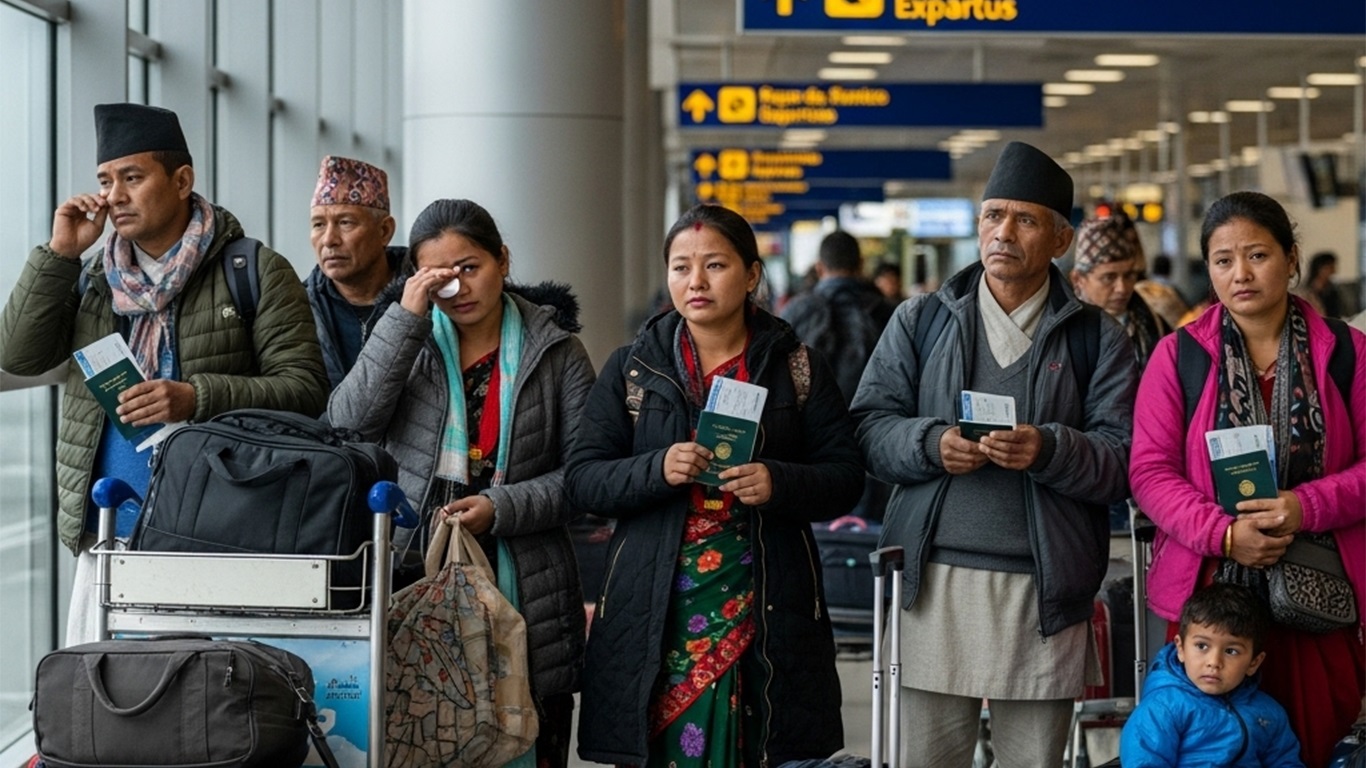


Kathmandu. The government’s decision to expel 18,000 illegal immigrants from Portugal has caused great concern among the Nepali community. The announcement, made in preparation for the upcoming elections, has put the future of thousands of Nepali migrants in the country uncertain.
Government decisions and political background

The Portuguese government has taken this step to organize illegal migrants ahead of the general elections on May 18, 2025. Portuguese Presidency Minister António Leto Amaro said the current expulsion system was “ineffective” and needed reform. Initially, 4,500 illegal immigrants were asked to leave the country voluntarily within 20 days. The decision is the result of growing right-wing sentiment in Portugal and political pressure to make the issue of immigration an election agenda.
Reality of Nepalese in Portugal
There are over 50,000 Nepalis in Portugal at present. A large number of them are in the process of legal recognition through informal channels. The new rules will have a serious impact on the process of getting their residence permits. The Embassy of Nepal has been supporting the Nepali community in such challenging times. However, there is no exact data on the number of Nepalis who need to return home immediately.
Nepali migrants make up a large chunk of the total number of illegal immigrants in Portugal. Of late, many Nepalis have been going to Portugal as it is easier to become legal there than other European countries. The current strict policy has increased the possibility of closing the old route of Nepalis choosing Portugal to enter Europe. This has added a new challenge to the search for the future of Nepali workers.
Path to the Future
}
Portugal’s move reflects the tough stance of European countries to address the problem of illegal migration. This decision has made not only Nepalis in Portugal but also thousands of Nepali youths who want to go to Europe in search of new opportunities. The social and economic impact will be a major challenge for both the Nepali community and the government.