



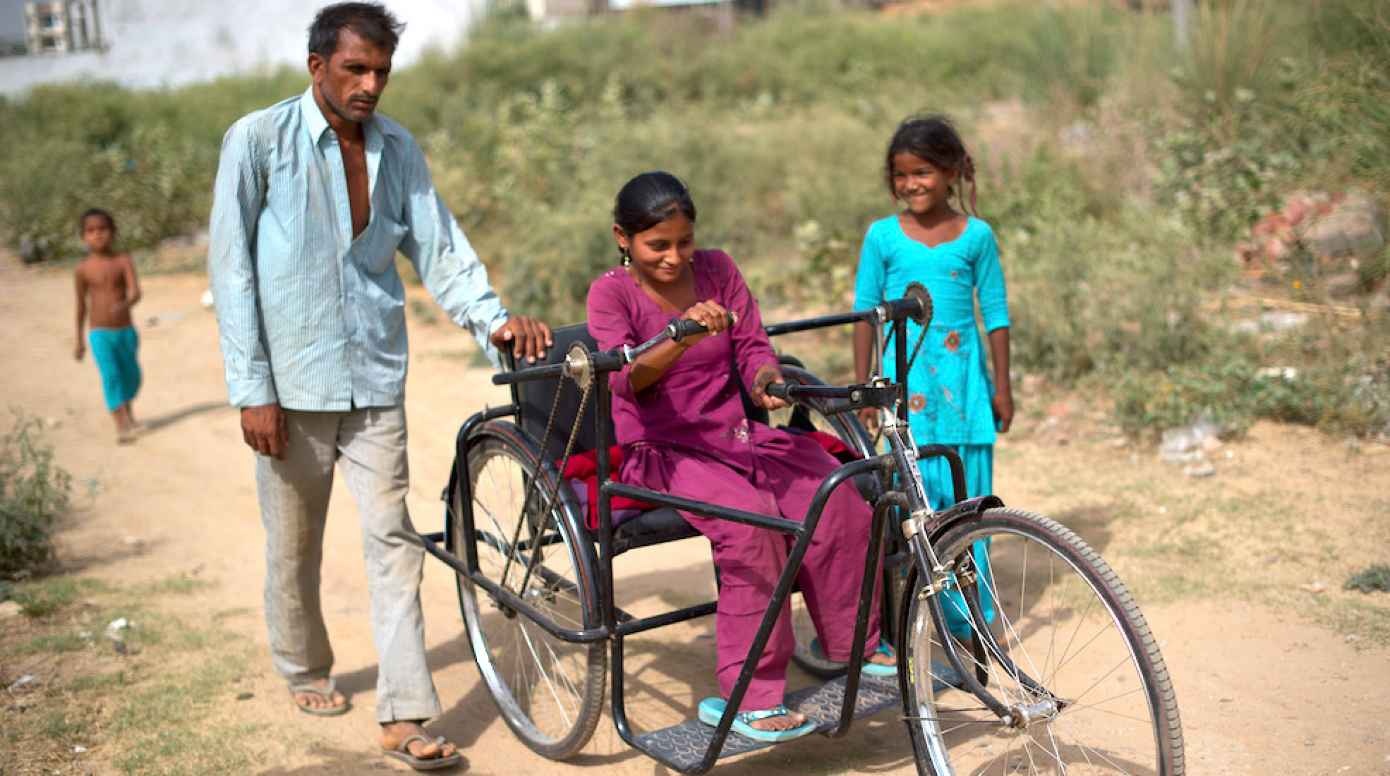

Kathmandu. New concerns have emerged about the status of people with disabilities in India’s healthcare system.
The survey conducted by the National Centre for Employment Promotion of Persons with Disabilities (NCPEDP) in India between 2023-25 covered more than 5,000 people with disabilities across the country. The results of the survey show that at least 80 per cent of India’s nearly 160 million people with disabilities lack any form of health insurance coverage. What is even more worrying is that about 53 per cent of those who apply for insurance have been directly denied coverage for no apparent reason.


The study, titled ‘Inclusive Health Coverage for All: Disability, Discrimination and Health Insurance in India’, clearly reveals that people with disabilities face invisible barriers right from the first stage of the health insurance process. The underwriting policies of insurance companies are discriminatory and treat disability as a risk.
People with autism, psychosocial disabilities, intellectual disabilities, and blood disorders, such as thalassemia, face higher rates of cancellation. Their disability or pre-existing condition is often used as an excuse.
The survey also raises serious questions about the use of digital insurance platforms. People with various disabilities, especially those with visual, hearing or intellectual disabilities, face many challenges by using these platforms. Websites and mobile apps are often not screen reader-friendly, difficult to provide information, and have no support systems.
In addition, people with disabilities lack information about government and private insurance schemes. Lack of information, language barriers and lack of support have held them further behind.
Arman Ali, executive director of NCPEDP, described this reality as a clear reflection of the structural inequalities that exist in the health and insurance sectors in India. According to him, the principles of equal rights enshrined in the Constitution, the Rights of Persons with Disabilities Act, 2016, and the guidelines issued by the Insurance Regulatory and Development Authority of India (IRDAI) are all limited to paper. “The path to health insurance for persons with disabilities is riddled with discrimination and weaknesses,” he said, adding that nearly 160 million people with disabilities are still deprived of equal insurance benefits is a clear testament to a deep institutional failure. ’
In this context, the study also criticized the recent decision to expand the scope of Ayushman Bharat-Pradhan Mantri Jan Arogya Yojana. At a time when the Government of India covers all senior citizens aged 70 and above under the social health insurance scheme, the policy does not explicitly include persons with disabilities who are at higher risk of physical and mental health, on a priority basis.
“People with disabilities face the same health risks as the elderly and, in many cases, are at greater health risk,” the study said. Yet they have been excluded from policymaking as invisible citizens. ’
This study provides some clear recommendations for bridging the gap between legal and policy commitments and reality. First, it emphasises on immediate inclusion of all persons with disabilities under the Ayushman Bharat scheme, irrespective of their income or age, without any additional conditions or paperwork. Second, it emphasizes the need to mainstream mental health services, rehabilitation, therapy, and assistive technologies (e.g. wheelchairs, hearing aids, communication devices, etc.) into insurance coverage. Because people with these disabilities need to live a normal and dignified life.
The report also calls for the formation of a dedicated Disability Inclusion Committee within IRDAI. It will reflect the perspectives and experiences of people with disabilities at every stage of insurance policy formulation and policy underwriting. It also emphasizes the need for mandatory disability-sensitivity training for employees of insurance companies, agents, TPAs, and healthcare institutions. So that frontline workers can avoid acts of direct discrimination and respect the needs of customers with disabilities. Source: Asia Insurance Review