



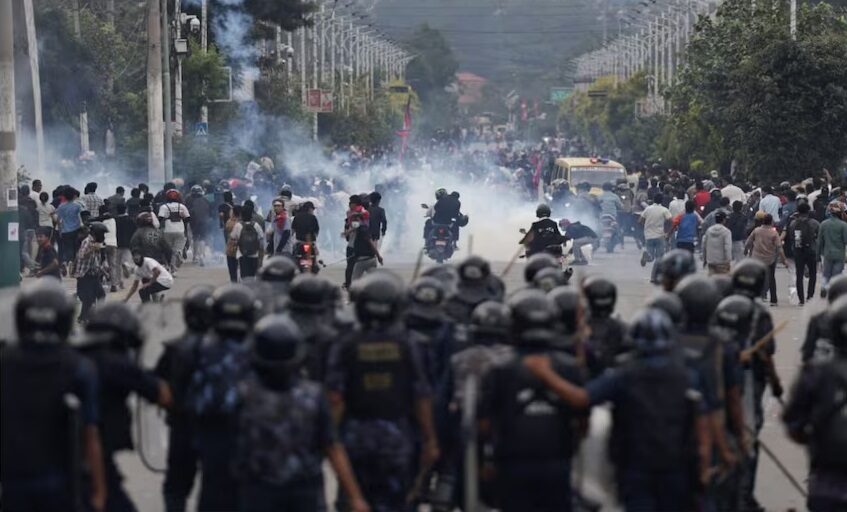

Kathmandu. The Genji agitation of September 23 and 24 has deeply dealt a blow to the country’s private sector. Many industries, businesses and services have been hit hard by vandalism, arson and a halt in economic activity. Entrepreneurs are finding it difficult to pay salaries and the morale of investors has also fallen.
In such a sensitive situation, the government’s relief package will provide immediate relief, but the question remains unanswered whether it can uplift the private sector in the long run.



The package unveiled by the government through the Rastra Bank has provisions such as ‘Payroll Protection Scheme’, loan rescheduling, restructuring and increasing the vehicle loan ratio. These measures will give businesses time to breathe for the time being. Specifically, the base rate for salary payment is 0. The provision of loan at 5 percent premium and 2 percent interest subsidy is a direct relief for the affected businesses.
In addition, the option of debt rescheduling and restructuring can provide a temporary solution for the reconstruction of damaged structures. But this alone does not guarantee that the morale of the private sector will return in the long run. Some experts also say that this package has only touched the surface of the problem.
They believe that monetary concessions alone cannot restore confidence without addressing the protests, political instability, legal uncertainty, market insecurity and crisis of confidence in the investment climate. Stability, policy clarity and long-term investment security are equally important for the private sector.
From the point of view of the banking system, this package will help the private sector to some extent, but it will be a burden on the banking sector. The banking sector, which has been facing Covid, natural disasters and various economic crises, has once again been pushed into the responsibility of rescheduling loans. This may provide immediate relief but may have a negative impact on the bank’s risk appetite and financial health, experts say. Experts worry that restricting banks to the role of “relief mechanisms” would pose a threat to long-term financial stability.
Similarly, another weakness of the concession package is its limited access. Not only the businesses directly affected by the agitation but also a large number of suppliers, distributors and service providers who have been indirectly affected by the agitation. However, the package is not targeting them. This has led to some imperfection in the objective of reviving the overall business ecosystem.
However, on the positive side, the government’s decision to take some policy steps at such a sensitive time is an important message in itself. This reflects the government’s commitment to the private sector and has a “psychological impact” on immediate relief. However, deep reforms such as reform of the tax system, investment-friendly legal framework, investment in infrastructure, political stability and security mechanism are necessary to build long-term morale.
Experts point out that the relief package brought by the government is a relief for the time being, but there is no complete treatment. This, they say, gives the private sector a chance to bounce back, but converting that opportunity into long-term confidence will require more comprehensive policies, structural reforms and a clear vision from the state. Otherwise, experts say there is a risk that this package could be limited to short-term solutions like previous relief plans.
Experts say that the relief package will provide immediate relief to the private sector, but it is unlikely to give long-term positive results unless the banks are brought into the facility.
At a time when the banking sector itself is under pressure from continuous rescheduling and restructuring, there is a challenge of increasing systemic risks while implementing a new package again. According to the CEO of the bank, from Covid to floods, earthquakes and now protests, banks have to take the path of easing loans in every crisis. This is not only affecting the financial statements of the banks but also the morale of the banks.
They have pointed out that this package will help to boost the morale of businessmen, but if the morale of the banks deteriorates, then the entire financial system will be in crisis. Therefore, experts say that the government needs to address the banking sector along with the private sector to make the package effective.