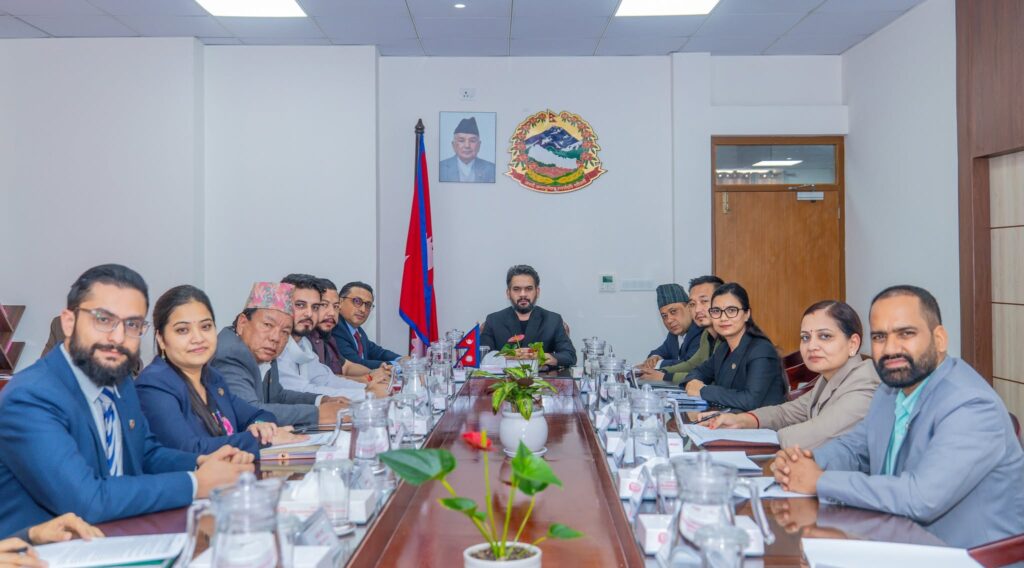






Kathmandu. KATHMANDU: A meeting of the Council of Ministers of the Government of Nepal on Sunday issued a 12-point decision and directive to cut public sector expenditure and adopt austerity.
The meeting also directed the political and administrative officials not to use the use of not providing more than one vehicle to the political and administrative officials who get the vehicle facility except in the related laws. With this decision, the vehicles used illegally by former prime ministers, former ministers and leaders of political parties from various hydropower projects will be taken away.



The meeting also directed the government to manage the vehicles from the available vehicles without purchasing new vehicles for the convenience of political and administrative officials, and to prepare separate criteria for the management of vehicle facilities to the officials and employees receiving vehicle facilities within 45 days and manage them accordingly.
The government has decided to scrap the facilities of the personal secretaries of the President, Vice President, Prime Minister, Speaker of the House of Representatives, Chairperson of the National Assembly, Province Chiefs, Ministers of the Government of Nepal and other political office-bearers.
The officials who do not provide meeting allowance to the officials and employees of the public bodies for regular work and the officials who use the private houses owned by the government, themselves or their family members will not be entitled to the accommodation allowance.
The government has decided to invest shares and loans in public corporations only for the projects that have to bear the responsibility towards the citizens. Likewise, the government will not make further investment in public enterprises that are financially weak and cannot pay principal, interest and returns, and the institutions with investment of the government will not be able to issue right shares and additional public offering (FPO) shares.
The meeting also decided to ban foreign travel except in emergency cases at the expense of the government of Nepal, provincial governments, local levels, corporations, institutions and regulatory bodies.
In the international assembly where the representation of the government is mandatory, the delegation led by the head of the state or the head of the government will have a maximum of 10 members and the other delegation to be at the source of the Government of Nepal will have a maximum of 3 members.