



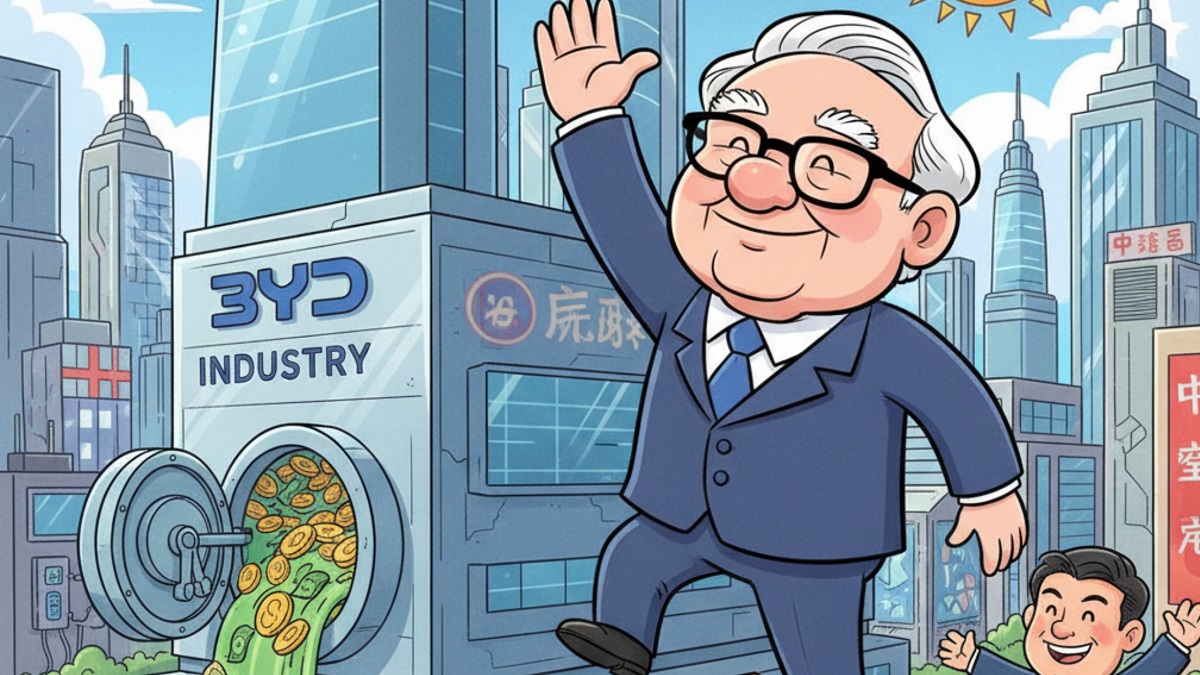

Kathmandu. Every decision made by billionaire Warren Buffett and his company Berkshire Hathaway is deeply analyzed by investors around the world. Berkshire has completely pulled out of its 17-year-old investment in Chinese electric vehicle maker BYD. The decision is not just financial news but also a profound case study for investors, entrepreneurs and policy makers in Nepal.
The investment journey began in 2008 with $250 million and yielded an incredible return of nearly 4,000%. Buffett’s late partner, Charlie Munger, praised the BYD founder as “a miracle man”. But now, due to the changing situation in the Chinese market, Buffett has ended this profit-oriented journey.



Why was the investment withdrawn? Because of the reality of the Chinese market
Berkshire’s exit from BYD was not due to a lack of performance or technology, but to the fierce competition in China’s electric vehicle market. The price war between the companies there has led to a decline in profits.
Huge Decline in Profit: Recently, BYD’s quarterly profit has fallen by 30 percent. This is a big blow for the company.
Decrease in sales: The company also lowered its annual sales target after declining domestic sales for 4 consecutive months.
These developments reaffirm Buffett’s philosophy of “entering at the right time and exiting at the right time”. He makes decisions only after analyzing market conditions and potential future challenges.
TAG_OPEN_strong_41 5 Important Lessons for Nepalese Investors and Stakeholders
The electric vehicle market in Nepal is expanding rapidly. EVs account for more than 70 per cent of imported vehicles, with Chinese brands accounting for more than 76 per cent. In such a situation, the BYD incident teaches us the following important lessons:
Risks of Investing in Technology: Any emerging technology may look attractive, but it may have high competition and technical risks. This leads to fluctuations in the return on investment.
The importance of entering and exiting at the right time: Buffett held his investment for 17 years, but when the market conditions changed, he decided to book a profit and exit on time. This decision teaches investors to be rational, not emotional.
The Art of Understanding the Depth of the Market: is not just about looking at the stock price and the company’s growth. It is also important to understand the policy changes that may occur in the market, the level of competition and the pressure on profits.
Portfolio Diversification: Buffett has invested in stocks in a variety of sectors, not just one company. This does not allow the problem in any one area to affect the overall portfolio. This is also an important strategy for Nepali investors.
{{TAG_OPEN_span_31} Potential and Challenges of Clean Energy: The BYD incident shows that the potential for electric vehicles and clean energy is still high globally. But, at the same time, it should be understood that this sector is not free from competition and challenges.
Conclusion
}
Berkshire Hathaway’s exit from BYD is not only a happy ending to a historic investment, but also a practical lesson for investors around the world. For a market like Nepal which is in the process of adopting new technologies, the analysis of such international developments helps to further refine investment and business strategies. To seize future opportunities in the field of clean energy and electric vehicles, we must take the path of strategic, conscious, and informed investments.