



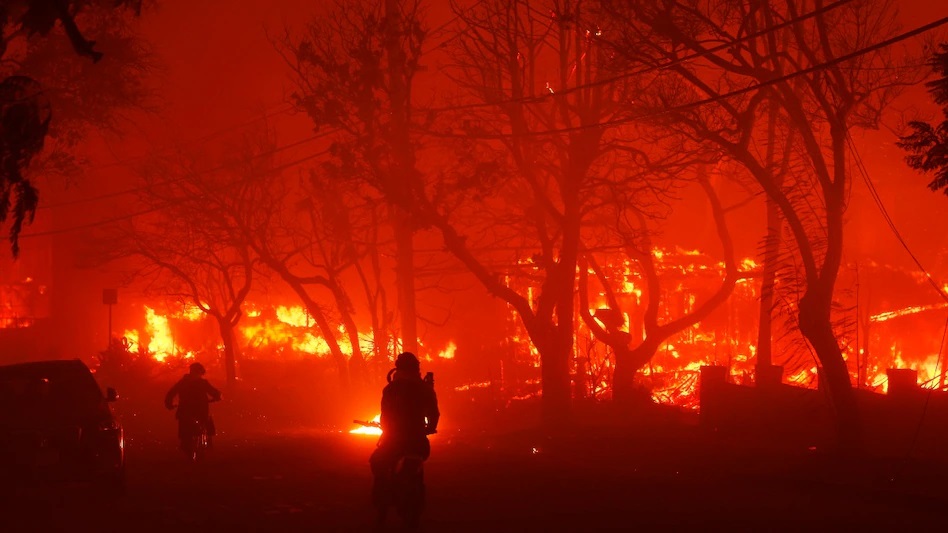

Kathmandu. There have been reports of wildfires in the heat of the earth’s northern hemisphere. For example, ‘Spain, Portugal and Greece are on fire in a wave of relentless heat’, ‘Fires in Canada are burning there, never seen before’, ‘Britain on the way to breaking the record of fires by 2025’, etc.
A recent report by international brokerage firm Gallagher says the fires are no longer just a hot hazard, but regulations have changed. “Every season is now a season of fires, and urban fires are a growing concern for communities, businesses and insurance companies,” the report said. ’



The devastating fires in Los Angeles in January are still fresh in memory. The fires, which were caused by storms, low rainfall and extremely dry vegetation, killed 30 people, destroyed 16,251 buildings and reduced more than 22,000 hectares of land to ruins. “It’s certainly unusual to have such a big fire during the winter. We’re facing a new reality related to the seasonal nature of forest fires,” said Steve Bowen, Chief Science Officer at Gallagher Reich.
In March, a series of fires in South Korea killed 32 people. In just one week of the fire, 104,000 hectares of land were reduced to ruins.
Steve said that the situation is getting serious as temperatures are rising in areas that have never been burned before or experienced very few fires, and changing land use continue to cause fire damage. “This growing risk has led to huge economic losses and increased insurance costs,” he said.
The damage insured by the Los Angeles fires is estimated to be $40 billion. Since 2015, direct economic losses from forest fires in the United States have been recorded at more than $111 billion.
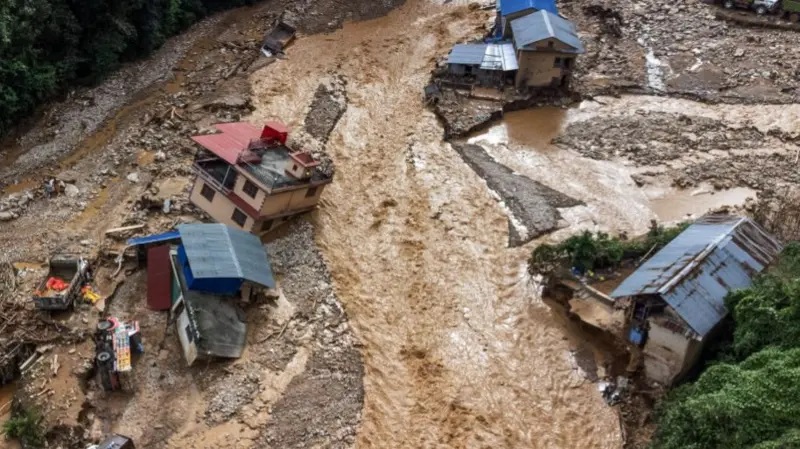
In February and March, heavy rains in Southern California caused flash floods, landslides, and flooding. As a result, the settlement was forced to evacuate.
Other economic impacts include the loss of tourism and hospitality businesses and long-term disruptions to the agricultural industries. Power companies face damage to infrastructure.
When power companies try to reduce the risk of prosecution, they regularly implement pre-emptive blackouts during escalating fire periods. For businesses and communities, such disruptions can lead to costly disruptions to operations. Whether it is any physical damage or not.
The Los Angeles fires exhibit another worrying trend. Because the fires are spreading rapidly from rural to urban areas and are affecting the entire community. “We’re really competing with threats,” said Ian Giamanko, vice president of standards and data analytics at the U.S. Insurance Institute for Business and Home Safety. When we built our communities, we ignored the historical threat of urban fires. ’
“Insurance companies are less concerned about the risk of wildfires,” gallagher’s report said. Because they want to control their risk. Insurers are looking for more detailed asset risk information based on construction, occupancy, safety, and risk. ’
Martha Bain, managing director of U.S. Property in Gallagher, said: “Any data analysis we can include when presenting insurance companies for customers at risk of wildfires can make a huge difference to renewal. Because carriers are using more technology and data points to underwrite this risk. ’
U.S. insurance companies are increasingly turning to third-party risk scoring tools to assess, price and manage wildfire risk. They can adjust pricing and limits accordingly, and in some cases deny coverage where risk scores exceed certain limits.
California’s Department of Insurance announced plans last year to use disaster models of wildfires at pricing risk. “This Bun Wildfire Score can actually determine how much coverage the insured will get and how much it will cost,” ben says, “But, when customers have a good wildfire score, we can work with our loss control teams to create a checklist of how they can strengthen their assets.” ’
Recent events have taken place far away from Australia. Which faced an unprecedented fire during the 2019-20 Black Summer. But, as Gallagher points out, wildfires are a never-ending threat, and insurance companies around the world are responding in the same way.