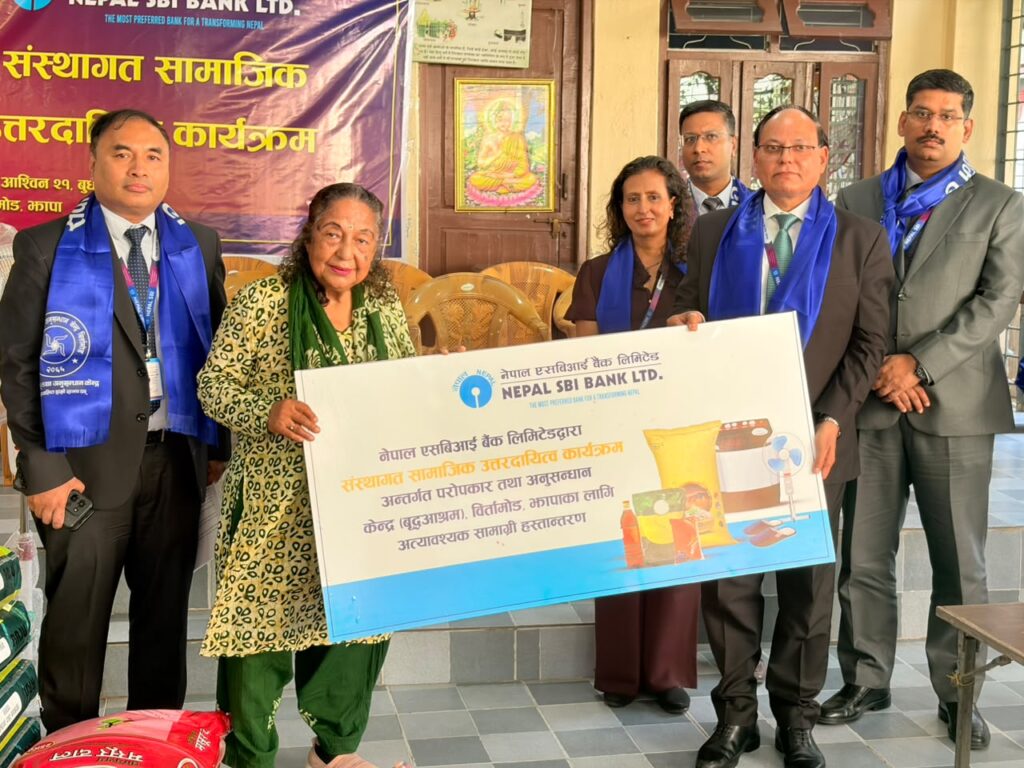






Kathmandu. Kathmandu: Nepal Rastra Bank (NRB) has made the first amendment to the corporate social responsibility (CSR) guidelines of banks and financial institutions. The central bank has now issued a circular to the banks and financial institutions to implement the guidelines as per the revised arrangement.
According to the revised guidelines, banks and financial institutions should play an important role in the upliftment of the poor, disadvantaged and targeted sections by fulfilling their responsibilities towards the country and society in accordance with the values, norms, spirit and international principles of institutional social responsibility. Banks and financial institutions also need to contribute to the protection of the human, social and external environment in order to increase the credibility of the general public towards the financial sector, maintain financial stability and run institutions continuously in the long run. Banks and financial institutions also have the responsibility to uplift the poor, disadvantaged and targeted sections by making the social and external environment more clean, inclusive and sustainable. Therefore, this guideline has been issued with the intention of making the expenditure of banks and financial institutions under corporate social responsibility transparent, effective and objective.


The main objective of this guidance is to contribute to the welfare and upliftment of the poor, underprivileged and targeted sections through the Corporate Social Responsibility Fund. While mobilizing the Institutional Social Responsibility Fund, the objective is to prioritize the welfare and upliftment of communities living in extreme poverty by selecting and identifying communities living in extreme poverty among those below the poverty line. It is believed that the implementation of this guidance will ensure equitable distribution of social responsibility expenses by banks and financial institutions across the country in a fair and transparent manner, promote social interests and effective use of resources for multi-utility works.
Banks and financial institutions of class ‘A’, ‘B’, ‘C’ and ‘D’ licensed by the Rastra Bank and the Infrastructure Development Bank (hereinafter referred to as licensed institutions) will have to allocate the amount of net profit of each financial year to the Corporate Social Responsibility Fund by allocating the amount determined by the Nepal Rastra Bank for corporate social responsibility related activities. The Board of Directors of the licensed institution may, after taking a decision, deposit more than the prescribed percentage of the amount from the Nepal Rastra Bank in the fund and spend it on the activities under the Corporate Social Responsibility.
The licensed organizations will have to prepare an annual action plan regarding the mobilization of the Institutional Social Responsibility Fund and inform the concerned supervision department of the Nepal Rastra Bank at least 15 days before the start of the respective half-yearly period. After the issuance of this guideline, the first half-yearly list can be submitted by mid-October.
With the approval of the financial statements of each financial year, the licensed organization will have to make arrangements to spend at least 60 percent of the amount deposited in the fund from the profit within the same financial year.
Areas that can be spent under corporate social responsibility
- Reconstruction of government and community school buildings in areas dominated by the poor and disadvantaged people damaged by natural disasters, including earthquakes.
- Expenses on scholarships given to poor, backward class and meritorious students with disabilities studying in schools and colleges.
- Computers, projectors, interactive smart boards, white÷black boards, books and other furniture, fixtures, libraries, etc. distributed to government and community schools and colleges.
- Students from poor and low-income families studying in the Faculty of Economics, Law and Management in universities and colleges will be given fellowship and research grants for research, research work under postgraduate, Ephil and PhD studies on the basis of recommendation by the respective universities and colleges.
- Expenses on school uniforms, educational materials, etc. provided to encourage students from poor and low-income families studying in government and community schools.
TAG_OPEN_li_27 Provision of clean drinking water, construction or improvement of toilets, sanitary pad dispensers, sanitizer dispensers, mask dispensers, first aid and other basic health and sanitation related materials in government and community schools and colleges in the areas dominated by poor and disadvantaged sections.
Similarly, banks and financial institutions will be able to spend on health, humanitarian assistance and relief, environment, financial literacy, etc. in areas dominated by poor and disadvantaged people.