




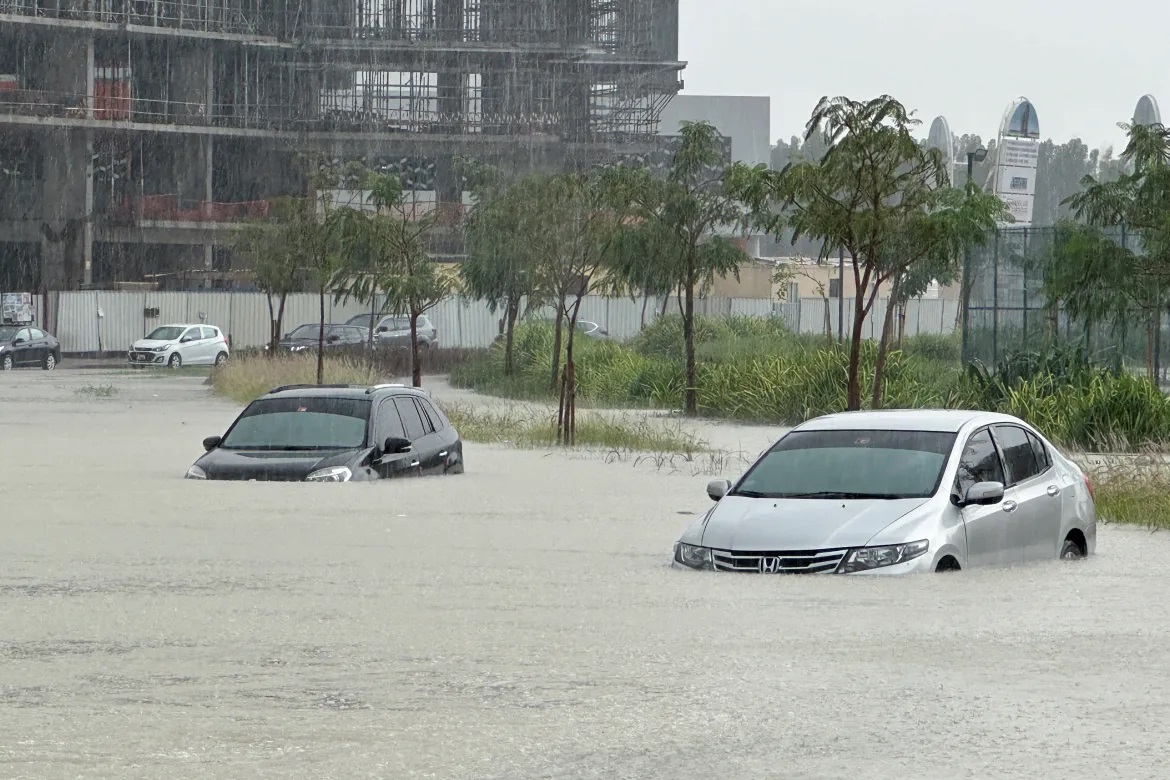

Kathmandu. The Swiss Re-Institute, a global insurance market research firm, estimates that the loss of insured assets from floods, landslides, hurricanes and earthquakes will exceed $300 billion by 2025.
The Swiss Re Institute has made this estimate based on a projection model analysis based on old data for forecasting damage. The year 2025 started with the fires in Los Angeles, USA. This resulted in an estimated $40 billion in insured losses. While the ability to bear these damages from secondary level risk is sufficient, primary risks remain the greatest threat. Severe storms or strong earthquakes hit densely populated urban areas. The damage insured that year could be more than twice the trend of long-term damage.



Urs Betscherchi, CEO of Swiss Rico Property and Accident Reinsurance, said, “In addition to helping customers with traditional risk transfers, reinsurers also provide data, risk insights, and knowledge about where the risks lie. The reinsurance industry is a shock absorber when risks turn into disasters and is also an essential negotiating partner around risk awareness and risk prevention. ’
Due to the accumulation of some primary-risk events or both secondary-risk and primary-risk events, the damage caused by natural disaster events reaches a high point. The most recent high loss was 2017. The year hurricanes Harvey, Irma, and Maria hit.
Since then, the inherent risks have steadily increased with economic and population growth as well as urban expansion. Areas prone to natural disasters are also included. In addition, the effects of climate change are playing a role in increasing damage for certain weather risks and regions.
“Our recent analysis of more than 200 in-house models and trends in damage over the past 30 years show what is at risk,” said Balz Grolimand, head of The Swiss Rico Disaster Risk. A severe storm or a major earthquake strikes an insured urban area. Insured losses could easily exceed $300 billion that year. ’
The Swiss Re-Institute estimates that some of the first storms of the 20th century will cause more than $100 billion in damage if they hit today. For example, hurricane Andrew, at today’s price, caused insurance losses worth $35 billion in 1992. If the storm hits today’s path, it will almost triple the damage caused by economic growth, population growth and urban expansion.
In 2024, the U.S. accounted for nearly 80 percent of global insured damage due to the risk of severe storms, hurricanes, floods, fires and earthquakes as the severity of the damage increases globally. Insurance rates are informed by a number of factors, including local regulations and inflation.
Nevertheless, the risk of natural hazards is the main factor in determining claim costs and insurance rates in the long run and geographically. This is evident in states such as Florida, Texas, California, Louisiana, and Colorado. That’s about 50 percent of all natural disaster damage in the U.S.
Global insurance losses from natural disasters reached $137 billion in 2024. It was caused by Hurricanes Helen and Milton, severe convective storms in the United States, wildfires, and large floods worldwide.