




Kathmandu. Owners of private-run medical educational institutions have agreed to increase the subsistence allowance of resident doctors on the condition of increasing the number of student admissions and teaching. The owners of private medical colleges have come up with lower wages of residential doctors as a strong excuse to increase both the number of students and tuition fees.
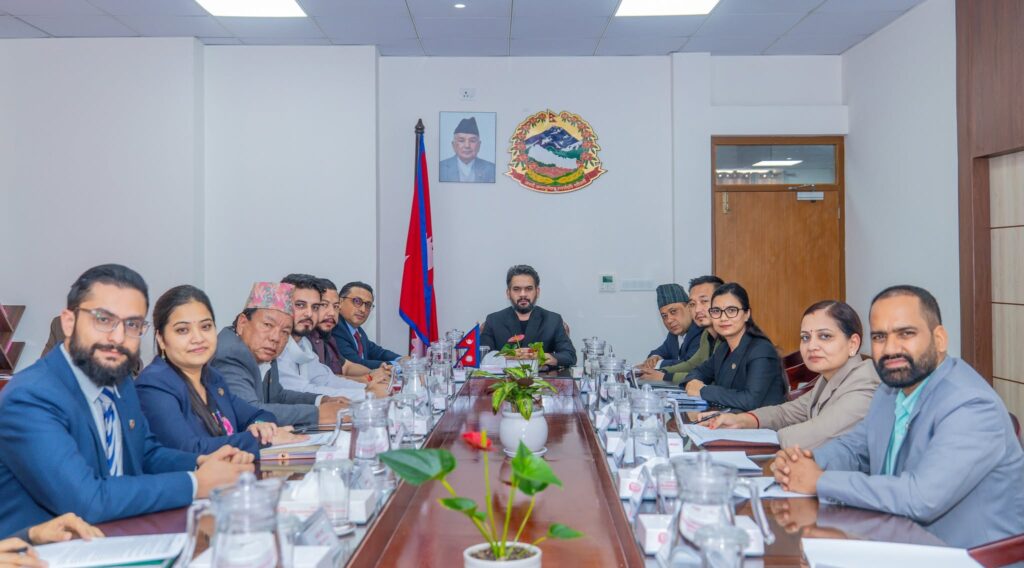
The 19th meeting of the Medical Education Commission held at the Prime Minister’s Office, Singha Durbar, has formed a task force under the coordination of NHRC Director Sujan Babu Marhatta to submit its opinion along with a study to increase mbbs and BDS seats and fees. The taskforce will comprise Prof Dr Dibya Singh Shah on behalf of experts, Senior Chartered Accountant Mahesh Guragain, Chartered Accountant Santosh Khanal on behalf of private medical colleges and under-secretaries of the Ministries of Education, Health and Finance.



The task force formed in the previous meeting on the issue of increasing the number of students enrolled in teaching hospitals with private sector investment has already suggested removing the existing limit of 100 seats and increasing the number.
The task force formed in the 18th meeting had prepared a report with the opinion that the admission quota could be increased after Prime Minister KP Sharma Oli agreed to increase the number of seats and increase the tuition fee after the initiative of the medical college operators.
Medical college operators have been pressing for at least 150 students to be admitted from the current 100. They also demanded that 33 per cent of the total intake capacity of foreign students should be allowed to be admitted.
The office-bearers of the Association of Private Medical and Dental Colleges of Nepal are concerned about when to pay the subsistence allowance to the agitating resident doctors. No date has been set.
The agitating doctors have been warning them not to return to work until they are paid as subsistence allowance.
An 11-member taskforce was formed under the coordination of Education Secretary Deepak Kafle in the 18th meeting to review the number of seats and fee structure. The meeting of the Commission has accepted the recommendations given by the task force. According to a member of the Commission, based on the suggestions given by the task force, the way has also been opened to increase the number of students enrolled in MBBS and BDS levels in medical colleges. Private sector medical college operators across the country, including Jhapa-based businessman Durga Prasai, will be benefited if the working procedure is prepared and implemented in this regard. However, due to the lack of funds due to expensive tuition fees, it will be more out of reach for meritorious but middle class and students from poor families who are trying to increase medical education.
Owners of private medical colleges have agreed to provide subsistence allowance to resident doctors as per the commission’s decision after the government paved the way for increasing both student admission quota and tuition fees. The commission’s 16th meeting held on February 15, 2018 had decided that private medical colleges should provide rs 48,737 per month as subsistence allowance to the resident doctors of post graduate level (PG) at par with the government.